

A good hair care routine starts with identifying your hair type — straight, wavy, curly, or coily — since each texture has different moisture, washing, and styling needs. Straight hair usually needs frequent, lightweight care; coily hair needs the least washing but the most moisture. Layer in weekly deep conditioning, scalp care, and heat protection for a routine that actually works.
Our Read 15 Hair Care Tips for Healthy, Strong, and Shiny Hair
1. How to Identify Your Hair Type

Before you can build the right daily hair care routine, you need to know what texture you’re actually working with. Hair types are typically grouped into four broad categories: Type 1 (straight), Type 2 (wavy), Type 3 (curly), and Type 4 (coily), each with subcategories like 2a or 3c that describe how tight or loose the pattern is.
An easy way to check: let your hair air-dry with no product after washing, then look at its natural shape. Flat and shiny with no bend means straight. A loose S-shape means wavy. Springy spirals mean curly. Tight zigzags or corkscrews mean coily.
Unique insight: Many people assume they have “straight” hair simply because they’ve always blow-dried or flat-ironed it. If you’ve never seen your hair completely product-free and air-dried, you may not actually know your true texture — and that mismatch is often why a routine isn’t working.
Our Read 10 Hair Care Mistakes Damaging Your Hair (And How to Fix Them)
2. The Building Blocks of Any Hair Care Routine
Regardless of texture, every healthy hair care routine rests on the same five pillars: cleansing, conditioning, moisture retention, protection (from heat and sun), and regular trims. How often and how intensely you apply each pillar is what changes from one hair type to the next.
Think of these five steps as a framework you customize, rather than five separate routines to memorize. Once you understand your hair type from the section above, you can slot in the right frequency and products for each pillar.
3. Daily Hair Care Routine for Straight Hair
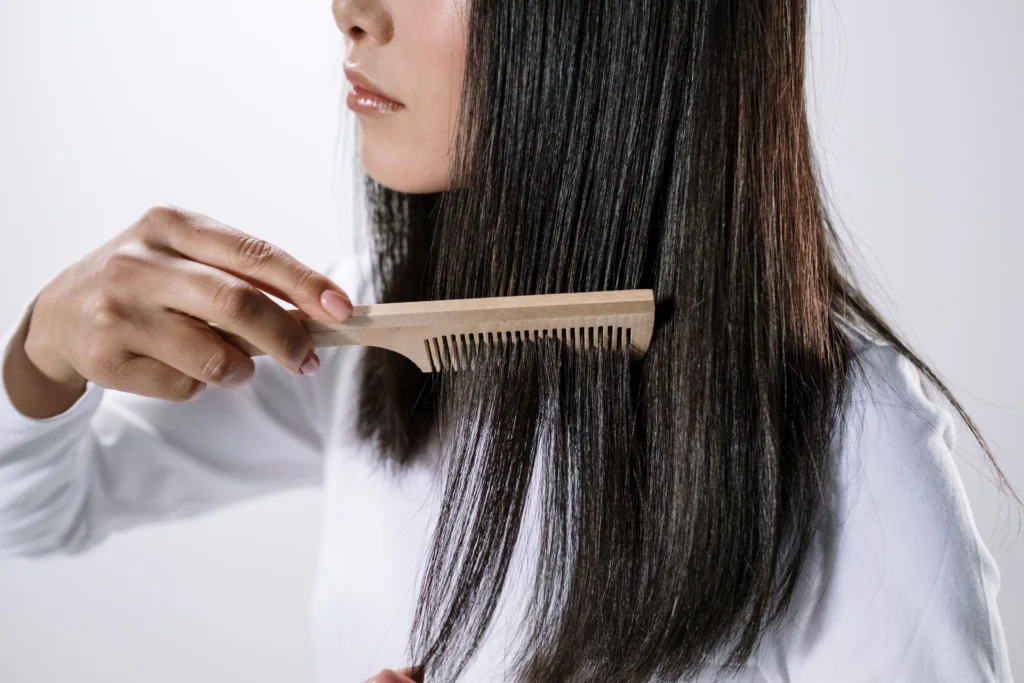
Straight hair tends to get oily fastest because sebum travels easily down a smooth, unbent strand. A daily hair care routine for straight hair usually includes a lightweight, sulfate-free shampoo (used every day or every other day, depending on your scalp), followed by conditioner applied only from mid-length to ends to avoid weighing down the roots.
On non-wash days, a few drops of dry shampoo at the roots can extend freshness. If you blow-dry, always apply a heat protectant first, and use a round brush at the roots for light volume without overloading the ends with product.
4. Weekly Hair Care Routine for Straight Hair
Once a week, straight hair benefits from a lightweight hair mask to keep it soft without making it look flat — heavier masks can leave fine, straight strands greasy by the next day. A gentle scalp treatment or exfoliating shampoo every one to two weeks also helps prevent the buildup that straight hair is especially prone to, since oil and product residue show more quickly on this texture.
Related reading: browse our prom hairstyles for long hair for ways to style freshly washed straight hair.
5. Daily Hair Care Routine for Wavy Hair
Wavy hair sits in between straight and curly, which means it often gets oily at the roots while staying dry at the ends — a tricky combination. A wavy hair washing routine usually calls for shampooing every two to three days with a hydrating, frizz-controlling formula, focused mainly on the scalp.
Apply a lightweight, foam- or cream-based styling product to damp hair to enhance wave definition, and consider diffusing on low heat rather than air-drying flat if you want more visible texture.
6. Weekly Hair Care Routine for Wavy Hair
Wavy hair benefits from a weekly ceramide-infused or moisture-restoring mask to keep waves defined rather than frizzy or shapeless. If you use a lot of styling products throughout the week, add a clarifying shampoo every couple of weeks to prevent buildup from weighing waves down and disrupting their natural bend.
7. Daily Hair Care Routine for Curly Hair
Curls are naturally drier than straighter textures because oil has a harder time traveling down a spiral-shaped strand. A curly hair care routine typically skips daily washing altogether — most curly hair only needs shampooing once or twice a week, with co-washing (cleansing with conditioner) in between to maintain moisture without stripping curls.
Detangle only in the shower, using a leave-in conditioner and a wide-tooth comb or fingers, working section by section from ends to roots. Never brush curls dry — this breaks up the curl pattern and causes frizz and breakage.
8. Weekly Hair Care Routine for Curly Hair
A weekly deep conditioning mask is non-negotiable for curly hair, since curls are more prone to high porosity, meaning moisture escapes through gaps in the cuticle faster than it does on smoother textures. Apply styling cream or gel to soaking wet hair, then scrunch gently from ends to roots to encourage definition without frizz.
Related reading: for curl-friendly inspiration, see our Hollywood waves hairstyles guide.
9. Daily Hair Care Routine for Coily Hair
Coily hair is typically the driest and most fragile texture, so a coily hair care routine is built almost entirely around moisture retention rather than frequent cleansing. Board-certified dermatologists note that thick, coily hair doesn’t need daily or even weekly washing, and can go two to three weeks between shampoos without harming scalp health.
Each day, focus on moisture: a light mist of water combined with a leave-in conditioner or oil can refresh coils without a full wash, while a satin or silk scarf protects definition and reduces friction throughout the day.
10. Weekly Hair Care Routine for Coily Hair
When wash day arrives for coily hair, work in sections to reduce tangling and breakage, and follow with a rich, deep conditioning treatment left on for at least 15–20 minutes. Applying a heavier oil, like castor or coconut, as a pre-wash treatment can further lock in moisture before cleansing strips any of it away.

Related reading: check out our braided prom hairstyles for protective styling ideas that work well between wash days.
11. Nighttime Hair Care Routine for Every Type
No matter your hair type, what happens while you sleep matters just as much as your daytime routine. Cotton pillowcases create friction that leads to frizz and breakage for every texture, so switching to silk or satin is one of the simplest universal upgrades you can make.
Straight and wavy hair can benefit from a loose braid to prevent tangling overnight, while curly and coily hair often do best with a “pineapple” style — gathering hair loosely on top of the head — or a satin bonnet to preserve curl shape until morning.
Related reading: for a shorter style that’s easy to protect overnight, see our prom hairstyles for short hair.
12. Scalp Care: The Step Everyone Skips
Regardless of hair type, the scalp is the foundation every hair care routine grows from, yet it’s the step most people forget. Weekly scalp massages with a brush or your fingertips (never scrubbed with nails) can boost circulation and help clear the buildup that leads to flaking or itchiness.
Unique insight: Straight and wavy hair typically need more frequent scalp attention since oil and product residue show up faster, while curly and coily hair need less frequent but deeper scalp cleansing during each wash to avoid disturbing curl pattern too often.
13. How to Adjust Your Hair Care Routine by Season
A hair care routine isn’t meant to stay static all year. Cold, dry winter air calls for extra hydration, more consistent oiling, and richer masks across every hair type. Summer heat and humidity call for lighter products, more frequent clarifying to manage sweat and buildup, and added sun protection, since UV rays can dry out and fade color on all textures.
If you swim often in summer, rinse hair with fresh water before and after chlorine or salt water exposure, and follow up with a deep conditioning treatment to replace lost moisture.
14. Common Mistakes That Throw Off a Hair Care Routine
Even a well-planned healthy hair routine can fall apart from a few small habits: over-washing (which strips natural oils and increases oil production over time), skipping heat protectant, brushing curls or coils when dry, and using products designed for a different hair type than your own.
Trial and error is normal, especially for curly and coily textures — dermatologists note it often takes some experimentation to land on the right combination of products for your specific hair, so don’t get discouraged if the first routine you try isn’t perfect.
15. Building a Routine You’ll Actually Stick To
The best hair care routine isn’t the most elaborate one — it’s the one you’ll actually follow consistently. Start with the core steps for your hair type (cleansing frequency, conditioning, and one weekly treatment), then layer in scalp care, heat protection, and seasonal adjustments once the basics feel automatic. A simple weekly hair routine practiced reliably will always outperform a complicated one abandoned after a few weeks.