
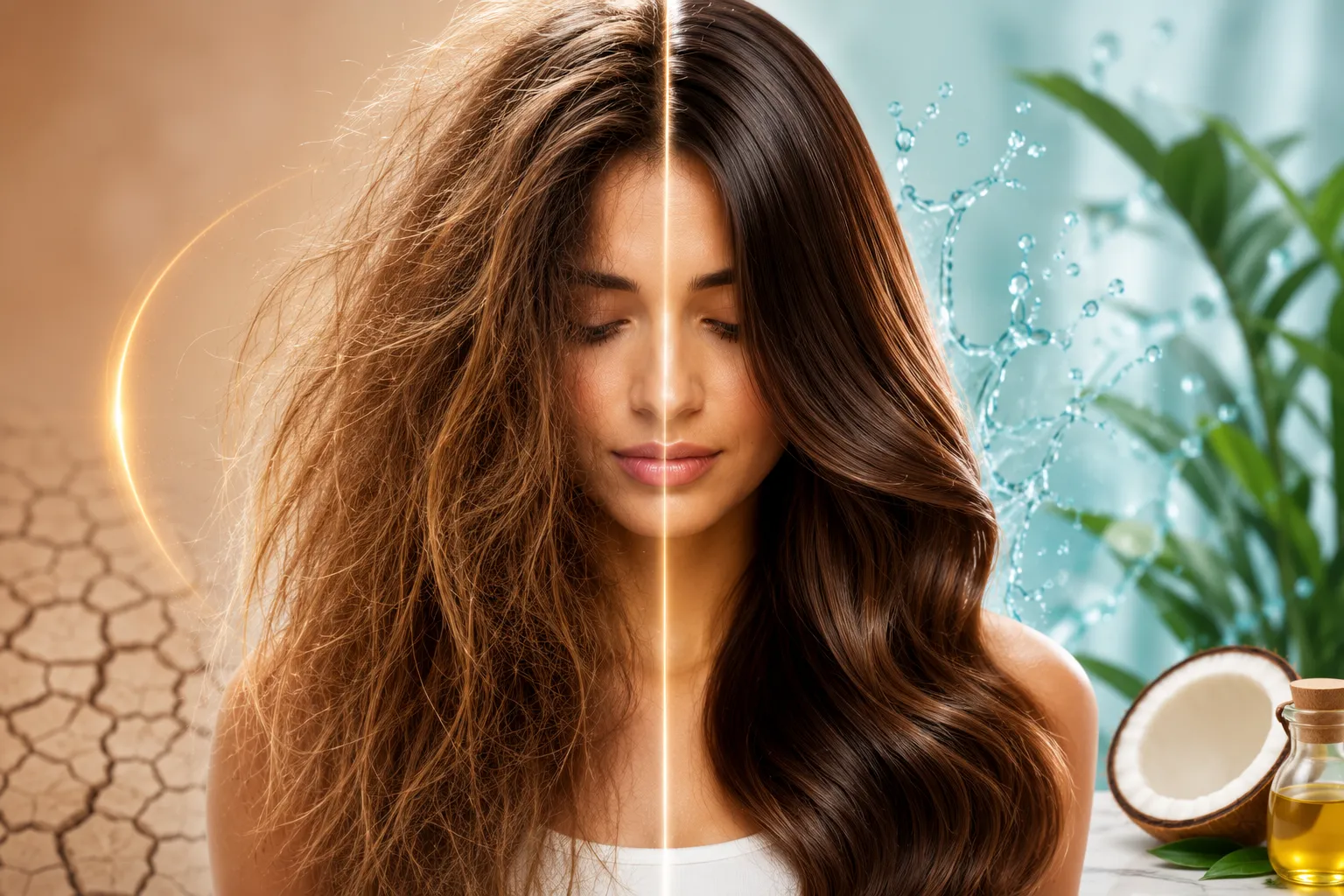
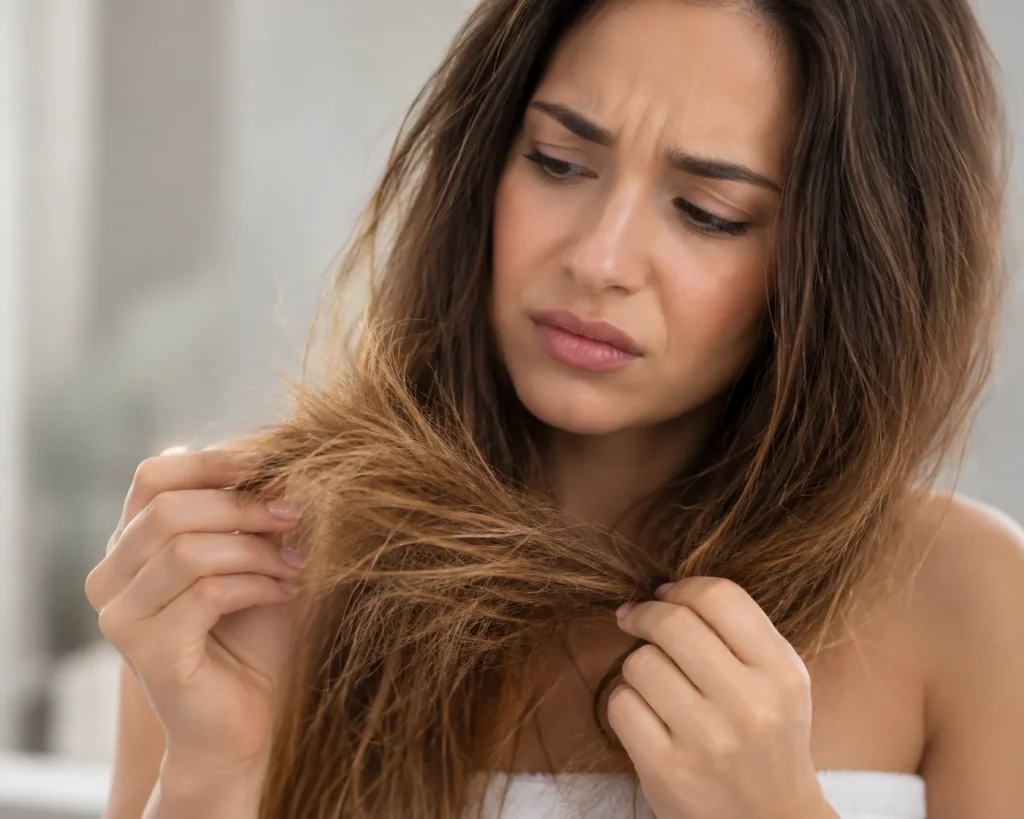
The clearest signs hair needs moisture are roughness, constant tangling, frizz, dullness, easy breakage, recurring split ends, an itchy or flaky scalp, slow product absorption, and limp curls. If two or more of these sound familiar, your hair is dehydrated and needs a deeper hydration routine, not just a quick conditioner swap.
Save This on Pinterest!
No time to read this signs hair needs moisture now? Click on the save button and pin it for later
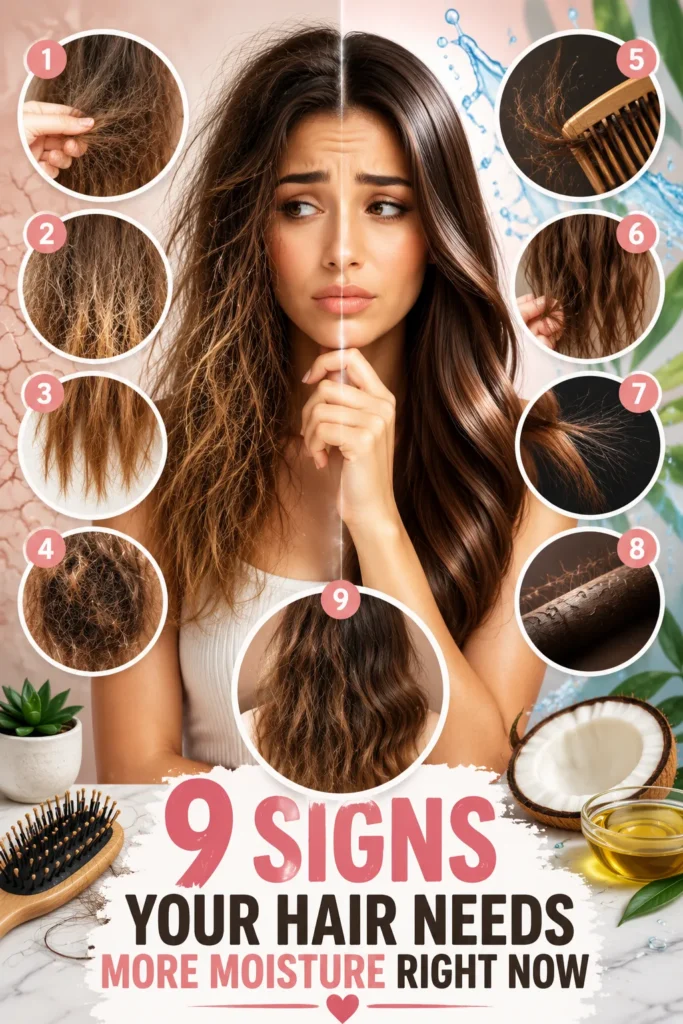
1. Your Hair Feels Rough or Straw-Like to the Touch
Run your fingers through your hair. If it feels coarse, brittle, or almost like straw instead of smooth and soft, that’s one of the most obvious dry hair signs. When the outer cuticle layer loses moisture, it lifts and roughens, which is exactly what you’re feeling when you run your hand over dehydrated strands. Healthy, hydrated hair has a silky, almost slippery texture from root to tip. If yours feels scratchy even right after washing and conditioning, your hair care routine probably isn’t giving it enough moisture for hair to actually absorb and hold onto.
This roughness usually shows up gradually, so it’s easy to miss at first. Many women only notice once styling becomes harder or their hair stops cooperating the way it used to. If this sounds familiar, it may help to revisit how to build a perfect hair care routine that prioritizes hydration at every step, from the shower to your final styling product.
Our Read 15 Hair Care Tips for Healthy, Strong, and Shiny Hair
2. It Tangles and Knots More Than Usual
When hair lacks moisture, the cuticle becomes rough and raised instead of smooth and flat. Strands with raised cuticles catch on each other constantly, which is why moisture-deficient hair tangles so easily during the day and knots up overnight. If you’re reaching for a detangling brush more often than before, or if brushing has become a wince-inducing chore, this is a strong indicator among the signs hair needs moisture.
Excessive tangling isn’t just annoying, it also increases breakage every time you pull a brush through a knot. Hair with good elasticity and a smooth, moisturized cuticle glides apart with minimal effort. If detangling has turned into a daily battle, it’s worth checking your routine for the small habits that dry hair out further, which we cover in hair care mistakes to avoid.
3. Frizz Shows Up No Matter What You Do
Frizz happens when the hair shaft is thirsty and starts pulling moisture from the air around it, especially in humid weather. The raised cuticle scales let moisture in unevenly, which swells the strand and creates that fuzzy, uncontrolled texture. If you’ve tried serums, creams, and anti-frizz sprays with little success, the real issue likely isn’t your styling products, it’s a lack of internal hydration.
Frizz that appears no matter the weather or product is one of the more persistent healthy hair problems, and it usually won’t fully calm down until moisture levels are restored from the inside out with the right conditioners, masks, and leave-in treatments.
Our Read Ultimate Hair Care Routine for Every Hair Type (2026 Guide)
4. Your Strands Have Lost Their Natural Shine
Shine comes from light reflecting off a smooth, flat cuticle layer. When hair is dehydrated, the cuticle lifts and scatters light instead of reflecting it, leaving hair looking dull and flat no matter how it’s styled. If your color used to look vibrant and glossy but now appears muted or lifeless, dryness is often the underlying cause rather than the color itself fading.
This is especially common after coloring treatments, since chemical processing strips moisture along with pigment. If you color your hair regularly, pairing your color routine with a hydration-focused plan can make a noticeable difference; our guide on choosing hair color for your skin tone also touches on keeping colored hair healthy after the salon.
5. Hair Snaps or Breaks During the Strand Test
A simple way to check for moisture loss is the strand test. Gently pull a single strand of hair between your fingers. Hair with good elasticity will stretch slightly and spring back. Hair that snaps quickly, with little to no stretch, is dehydrated and lacking the flexibility that moisture provides. This test is one of the most reliable dry hair signs because it measures the hair’s actual structural health rather than just its surface appearance.
If your strands are breaking with minimal pulling, it’s a sign to scale back heat styling and chemical treatments until moisture is restored, and to add a weekly deep conditioning treatment to rebuild flexibility.
6. Split Ends Keep Coming Back
Split ends form when the protective cuticle at the tip of the hair wears away, usually from dryness combined with friction and heat. Once hair splits, moisture escapes even faster from that point, which is why dry ends often split again shortly after a trim. If you’re getting your ends cut regularly but the same problem returns within weeks, moisture (not just length) is the missing piece.
Trimming removes damage but doesn’t prevent it from happening again. Sealing the ends with a lightweight oil or leave-in cream after washing can help lock in moisture and slow down how quickly new splits form.
7. Your Scalp Feels Itchy, Tight, or Flaky
Moisture problems don’t stop at the strands, they often start at the scalp. A dehydrated scalp can feel tight after washing, itch throughout the day, or flake in a way that’s different from dandruff. Since hair grows directly from the scalp, dryness there tends to affect the hair as it grows out, contributing to some of the other signs hair needs moisture on this list.
If your scalp feels uncomfortable rather than just your hair, look at your shampoo. Formulas with strong sulfates or hot water during washing can strip natural oils from the scalp, so switching to a gentler cleanser and rinsing with cooler water can help rebalance things.
8. Hair Takes Forever to Absorb Products, or Feels Squeaky After Washing
Well-hydrated hair drinks up conditioner and leave-in treatments fairly quickly. Dehydrated hair, on the other hand, often needs product worked in for much longer before it feels absorbed, or it sits on top of the strand without sinking in. Some women also notice a squeaky feeling right after rinsing out shampoo. While that can feel “clean,” it’s frequently a sign that natural oils and moisture have been stripped rather than preserved.
If this sounds like your washday, it may be time to reconsider your product lineup. Certain shampoos and stripping clarifying treatments used too often can work against moisture for hair rather than for it; our breakdown of hair care products worth trying can help you choose gentler, more hydrating options.
9. Curls Look Limp, Undefined, or Have Lost Their Bounce
For wavy and curly hair, moisture is what gives each curl its shape and bounce. When curls are dehydrated, the pattern often loosens, clumps fall apart, and hair can look stretched out or shapeless even right after styling. Curly and coily hair types are naturally more porous, which means they lose moisture faster than straight hair and typically need richer, more frequent hydration to keep their pattern defined.
If your curls used to spring back easily and now hang limp by midday, layering a curl cream over a hydrating leave-in, rather than relying on gel alone, can help restore definition and hold.
For more inspiration on keeping your hair looking its healthiest while you work on hydration, browse our hair care and hair color categories, or check out gray and silver hair color ideas and brunette hair color ideas if you’re thinking about a change alongside your hydration routine. If you have an event coming up, our guides to elegant prom hairstyles and loose waves for prom, or the prom hairstyles category, are worth a look once your hair is feeling soft and healthy again.